That red card was robbery.The biggest USMNT win in 24 years deserved better
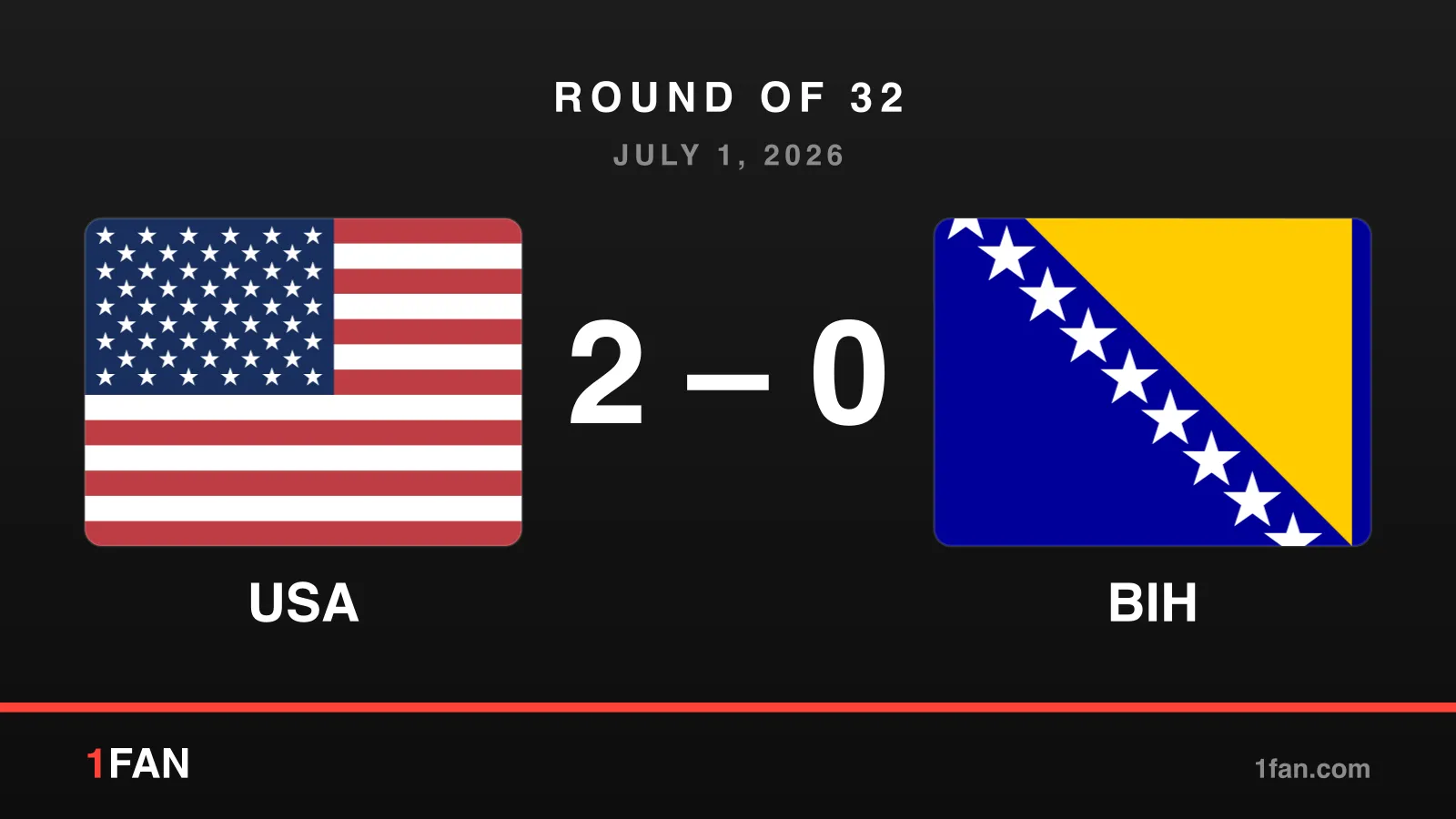
Twenty-four years. That’s how long American fans waited to watch this team win a knockout game on the sport’s biggest stage. Kids were born, grew up, and got mortgages during that drought. The wait finally ended Wednesday night against Bosnia and Herzegovina.
The referee let us enjoy it for about fifteen minutes.
Folarin Balogun scored just before halftime. The man who ended the curse. Just after the hour, the same Balogun was walking off the field with a red card that made an entire country stand up and yell at a television. The broadcast called it “a controversial decision.” Translation: half of America is still frame-stepping the replay and getting angrier each time. We watched it five times before writing this. It got worse, not better.
Malik Tillman’s 82nd-minute free kick made it 2-0 and put the game away. Great. Wonderful. The US is in the round of 16, and the striker who put them there is banned from playing in it.
Twenty-four years, and we couldn’t have one clean night
Let’s be honest about what this win meant before somebody’s whistle got famous.
If you’re under 30, you had never seen the US win a knockout game at this tournament. Not once. The last one was 2002, against Mexico, when flip phones were cool. Since then it’s been a generational hazing ritual. Ghana. Ghana again. Belgium in 2014, when Tim Howard made fifteen saves and it still wasn’t enough. The 2022 exit that got graded “promising,” which is what you call a team when you’re tired of calling it a disappointment.
Wednesday killed all of it. On home soil, in our tournament, this team went up a goal, lost its best striker to a whistle, and won anyway. Down a man for half an hour, protecting a lead with a country chewing its nails, and Tillman steps up and buries a dead ball. That’s not luck. That’s a team that finally learned how to close.
Which is exactly why the card burns. This was supposed to be the night. One night, no asterisk, no “yeah but.”
America hasn’t asked for much from this sport. We asked for one clean night. One.
“Controversial.” Say what it was
Here’s what one whistle actually cost, in plain math.
The US plays Belgium in the round of 16 on July 6. Balogun has been the most dangerous American on the field this entire tournament. He is now a spectator for the biggest US men’s match in a generation. Not because Belgium beat him. Because a referee reached for a pocket, and everyone watching had to double-check what they were seeing.
Coaches will say “next man up” because coaches are contractually required to say that. Fans know better. There is no next Balogun on this roster. There are different players who do different things, and Belgium’s staff started redrawing their game plan before the stadium lights cooled. Guess who that whistle helped most? The one opponent on the bracket with receipts against us.
And that’s the part that should make you angry, not sad. Sad is for losses. This was a win with a tax on it, paid by the guy who earned the night.
Seattle gets to answer for all of us
So here’s where the anger goes: July 6, Lumen Field, 8 p.m. ET.
Belgium again. The same fixture that ended the 2014 run in extra time. Except this time the roles are flipped. We’re the host. It’s our crowd, in one of the loudest soccer cities in the country, at the biggest US men’s match most of us have ever had the chance to attend. Belgium walks into that noise having been handed our best striker’s absence on a platter, and honestly? Let them think that’s an advantage.
Someone nobody expects now has to become a name your kids remember. That’s not a burden. That’s the entire history of this sport. Droughts die one game at a time, robberies get avenged the same way, and the next chance is Sunday.
The curse is dead. The ref kept the souvenir. Now Seattle sends the bill.